Product Description
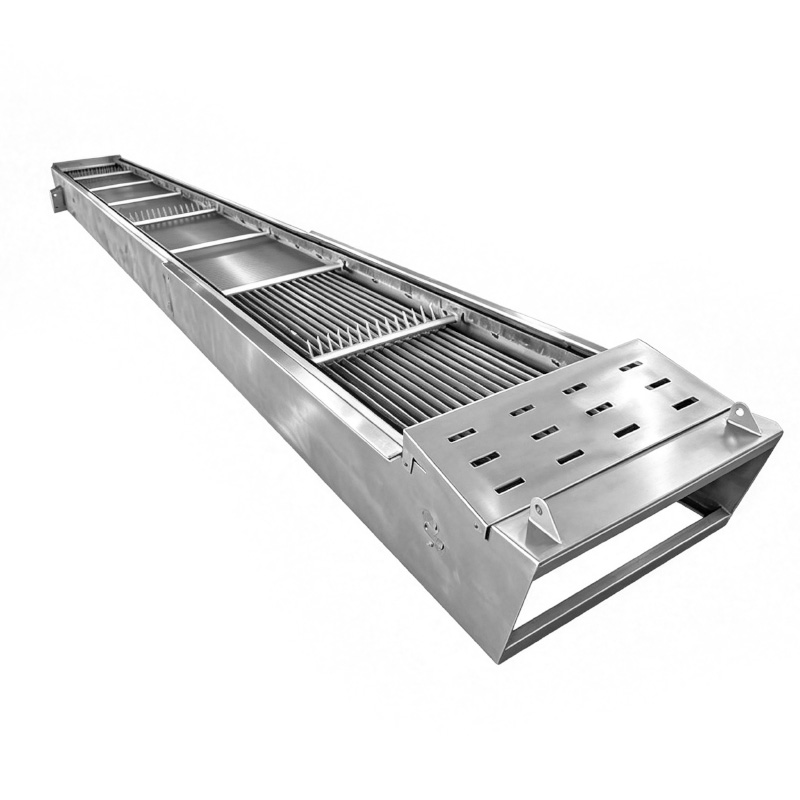
GSHZ AUTOMATIC ROTARY MECHANICAL BAR SCREEN
Continuous Screening for Reliable Wastewater Pretreatment
The GSHZ Rotary Mechanical Bar Screen provides automatic and continuous removal of floating solids, suspended debris and coarse contaminants from wastewater channels.
Installed at the headworks of a treatment system, the screen prevents plastics, fibers, leaves, paper, wood pieces and other debris from entering pumps, pipelines and downstream treatment equipment.
Product Applications
The GSHZ Series is suitable for:
Municipal wastewater treatment plants
Industrial wastewater treatment
Waterworks and raw-water intake channels
Stormwater and sewage pumping stations
Power-plant water inlets
Textile and printing wastewater
Slaughterhouse wastewater
Leather-processing wastewater
Papermaking wastewater
Brewery and food-processing wastewater
General industrial solid-liquid separation
Main Functions
Intercepts floating and suspended solids
Automatically lifts retained debris from the channel
Continuously discharges screenings
Protects pumps and downstream equipment
Prevents blockage of pipelines and treatment units
Reduces manual cleaning requirements
Supports continuous wastewater-treatment operation
Key Features
Continuous Automatic Operation
The closed-loop rake chain runs continuously to collect and lift solids from the water channel, maintaining stable screening performance.
High Separation Efficiency
Multiple rake teeth are arranged across the screen surface to provide continuous and effective removal of solids.
Automatic Rake Cleaning
The special rake-tooth structure creates a relative self-cleaning motion when the rake chain reverses around the upper sprocket. An optional rotary brush can further remove material remaining on the rake teeth.
Corrosion-Resistant Construction
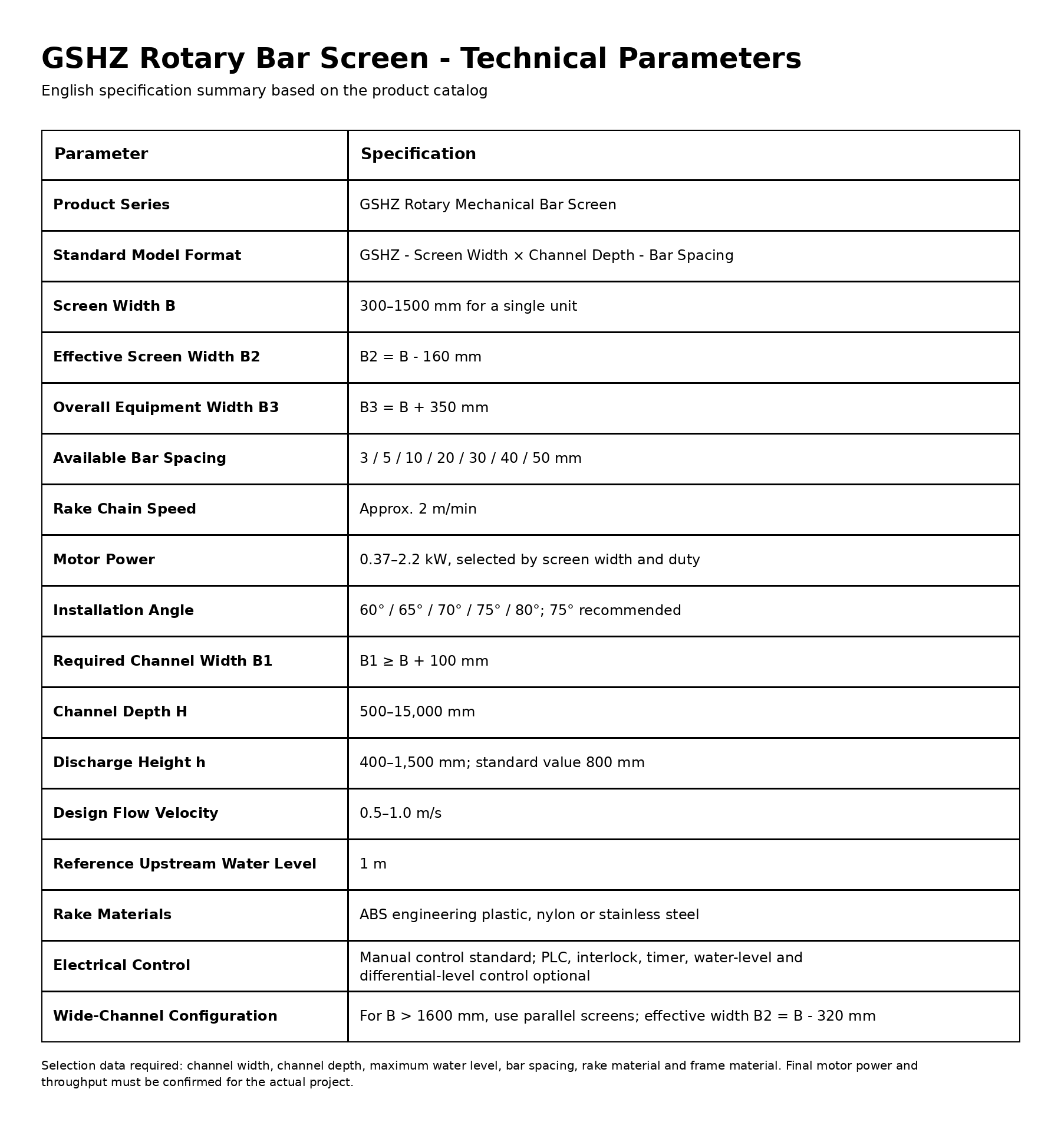
The rake teeth can be made of ABS engineering plastic,Nylon,Stainless steel.
The equipment frame and screen components can be manufactured according to the required corrosion-resistance level.
Compact Structure
The integrated structure occupies limited space and is suitable for installation in existing or newly constructed channels.
Low Energy Consumption
The screen operates at a rake-chain speed of approximately 2 m/min and requires only a relatively small drive motor.
Low Noise
The low-speed transmission system provides stable operation with reduced mechanical noise.
Flexible Automation
Manual control is standard. Optional control functions include:
PLC interface
Interlocking with conveyors and compactors
Timer control
Water-level control
Differential water-level control
Working Principle
The GSHZ Rotary Bar Screen consists of specially shaped rake teeth installed in sequence on a closed rake chain.
The lower section of the rake chain is submerged in the inlet channel. During operation, the drive system rotates the sprockets and moves the rake chain continuously along the screen surface.
Wastewater passes through the spaces between the screen bars, while solids larger than the selected bar spacing are retained. The rake teeth collect these solids and transport them upward to the discharge area.
As the rake chain passes around the upper sprocket, the rake teeth move relative to one another, allowing the collected material to fall by gravity. An optional rotary cleaning brush removes residual screenings before the rake chain returns to the channel.
This continuous operating cycle keeps the screen surface clean and maintains normal downstream flow.